

Sales & Operations Planning and Advanced Planning Systems have helped manufacturing companies improve visibility, align functions, and structure planning decisions across the business. They continue to create value for many organizations today.
At the same time, many of the planning concepts, processes, and system capabilities that companies still rely on were originally designed decades ago. While technology has evolved significantly, the underlying planning logic has often remained largely unchanged.
As markets become more volatile and interconnected, this creates growing pressure on traditional planning approaches and raises important questions about how planning should evolve going forward.
If planning is to better support modern business decisions, the next step is not to abandon S&OP or APS, but to evolve the logic behind them.
The foundations of S&OP and APS go back almost 40 years. Technology has improved significantly since then. Planning tools are faster, cloud-based, and can process much larger volumes of data.
Yet the core planning logic often still reflects approaches from 20–30 years ago.
That creates a gridlock. Companies keep asking for traditional planning functionality in their RFPs, and vendors keep building around that demand. As a result, teams get better tools for old ways of working, instead of unlocking the full potential of modern planning.
A traditional S&OP process often works like this: a statistical forecast is created, sales adjust it, and the business tries to agree on one consensus demand number. On paper, that sounds like alignment. In practice, it often becomes a negotiation.
Sales push for higher volumes to avoid missing opportunities. Supply chain pushes back to limit inventory risk. Finance tends to be more conservative. The result is a compromise.
The issue is that this consensus number hides the real discussion. Each function looks at demand differently because they carry different risks.
The result is often a number that everyone agrees on, but no one truly believes in.
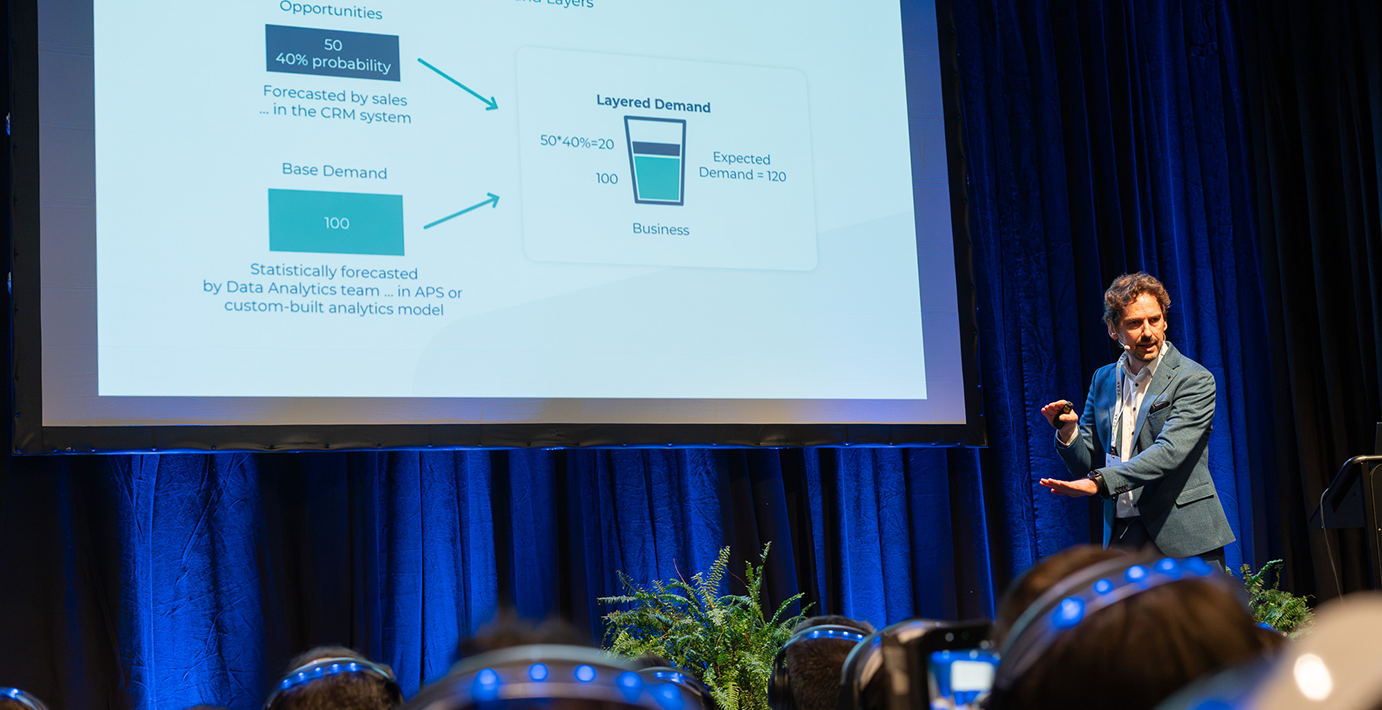
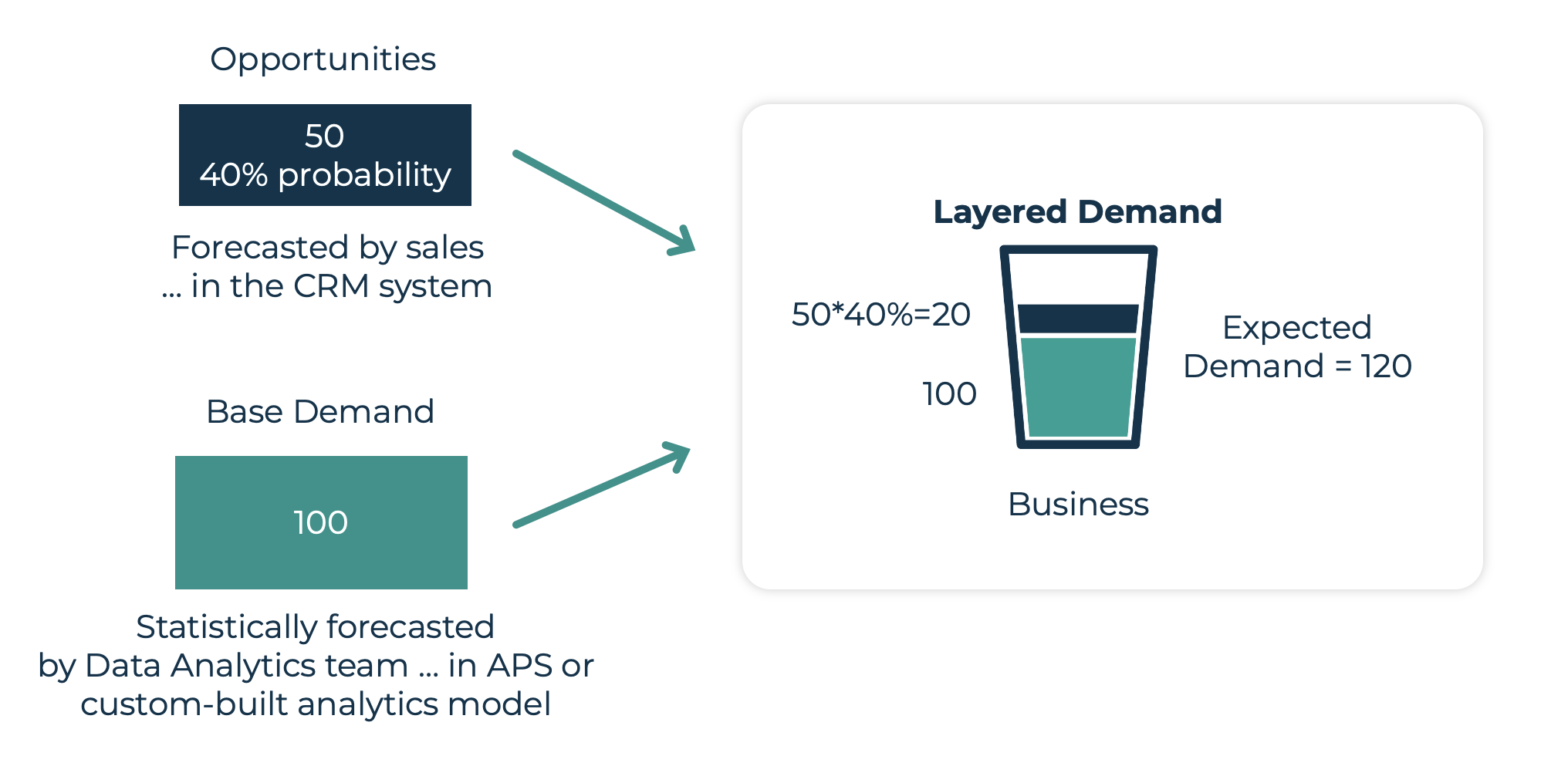
A stronger approach is to separate demand into layers. Base demand is the stable, statistically forecasted part and should remain untouched by commercial negotiation.
On top of that sit opportunities: potential upsides or downsides such as customer wins, tenders, promotions, or risks. These should be captured separately, with volume and probability. Instead of forcing one number, uncertainty becomes visible.
Expected demand may be 120, but the business understands what sits behind it. This is far more useful than forcing early consensus. It also opens the door to more advanced, probabilistic planning approaches over time.
Planning needs to be practical. If sales already manage opportunities in CRM, that is where they should stay. Planning should connect to that reality, not create parallel processes. Success is not just about algorithms, but about adoption. If the process is too heavy, people will not use it correctly.
Once base demand and opportunities are separated, supply planning becomes more powerful. The question is no longer: what is our one number? It becomes: how do we balance sales opportunity with inventory risk?
Scenario-based planning makes this explicit. Companies can define a small set of standard supply scenarios:
These are not operational tweaks. They are strategic choices about growth, risk, and cash. 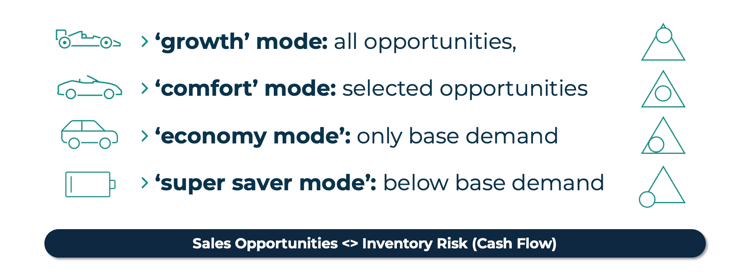
The final planning choice should not sit with one function. Choosing between 100 or 150 is not a sales, supply chain, or finance decision. It is a business decision. Planning should not aim for consensus at the start, but for clarity at the start and alignment at the end.
Start with transparency. Run scenarios. Then decide. S&OP becomes less about negotiation and more about decision support.
Traditional planning focuses too much on volume. To truly steer the business, every planning decision should also show financial impact: revenue, margin, inventory, and cash.
This does not require full financial optimization, but it does require financial visibility within the planning process. Planning should not create a parallel world where operations and finance calculate different answers. Different functions may still commit to different numbers, depending on their perspective and risk.
S&OP and APS continue to create value. But to unlock their full potential, companies need to move beyond outdated habits. That means:
This is not just a critique. It is a direction for where planning needs to go next.
At Solventure, we help manufacturing companies get the most out of their S&OP processes and APS solutions today, while also helping them evolve toward this next generation of planning.
